
What is an asbestos survey?
An asbestos survey is an inspection of a building to find out whether it contains asbestos-containing materials, where they are, what condition they are in, and what should be done about them.
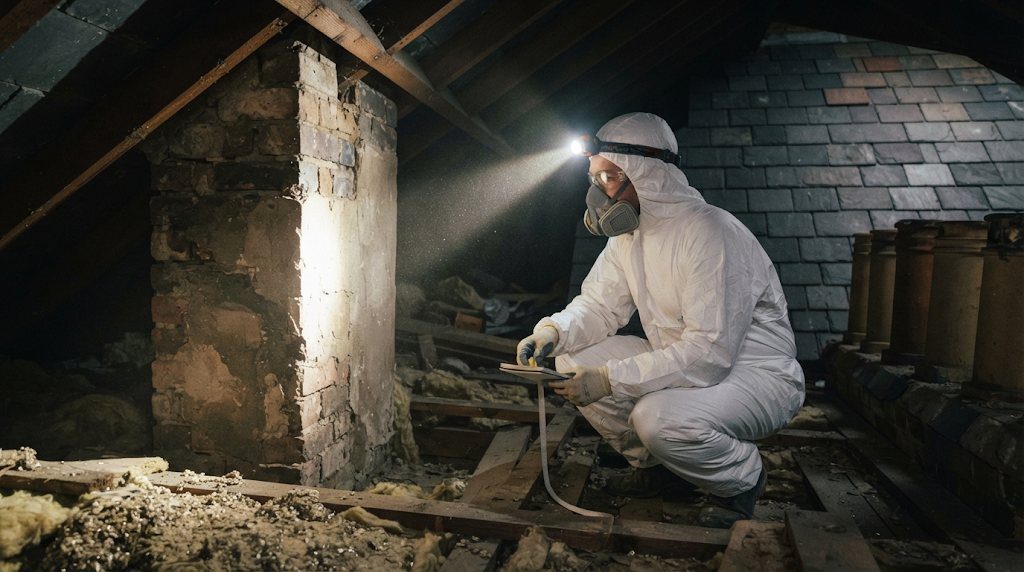
Why asbestos is a problem
Asbestos is a group of naturally occurring fibrous minerals that was mixed into cement, insulation, boards, coatings, floor tiles and many other building products because it resists heat, fire and chemicals. Blue and brown asbestos were banned in the UK in the 1980s, and all remaining types, including white asbestos, were banned in 1999.
The health risk comes from breathing in microscopic fibres, which can cause serious diseases such as mesothelioma, lung cancer and asbestosis, often decades after exposure. Asbestos that is in good condition and left undisturbed is a much lower risk than damaged or disturbed material, which is why the aim of surveying is to know where it is and keep it undisturbed or safely removed.
The two types of survey
The HSE survey guide HSG264 describes two main types. A management survey is for a building in normal use. It is minimally intrusive and finds materials that could be disturbed by everyday activity and routine maintenance, so they can be recorded and managed. A refurbishment and demolition survey is fully intrusive and is needed before building work or demolition, covering every part of the area affected.
A third service, re-inspection, checks the condition of known materials on an existing register and keeps the management plan current. Sampling and laboratory analysis is part of all of them, or can be booked on its own for a specific item.
Who needs one and when
The Control of Asbestos Regulations 2012 give the duty to manage to the person responsible for maintaining a non-domestic building. That includes owners, landlords and tenants with repairing obligations, and it covers the common parts of blocks of flats. For homeowners there is no general legal duty to survey, but anyone about to do building work in a home built before 2000 should have the affected area surveyed first.
Contractors also have legal duties before they start work, and many will not begin without a survey.
What happens next
The survey report contains an asbestos register. Materials in good condition are usually left in place, labelled and monitored. Damaged materials, or materials that will be disturbed by planned work, may need to be repaired, sealed or removed. Some removal can only be done by a contractor licensed by the HSE. That is why the sequence matters: survey first, removal only where the survey says it is needed.
Not sure what you need? Start with a survey.
Tell us about the building and an independent surveyor will get back to you. No obligation.